




Automatic Vibratory Feeder: Cost-Effective Dust Control Solution
Today, makers in a wide range of industries care most about how well they move materials and keep dust under control. The Automatic Vibratory Feeder is a game-changing invention that makes it possible to control dust in a cost-effective way while also improving production processes. Precision engineering and strong design come together in this new technology to make sure that small parts, powders, and granular materials are fed steadily and accurately. These feeders make sure that materials run smoothly and continuously by using advanced vibration control systems. This cuts down on dust production and makes the air quality in the workplace better. The Automatic Vibratory Feeder not only solves problems with dust but also improves overall operating efficiency. This makes it an essential tool for modern workplaces that want to be better and more productive.
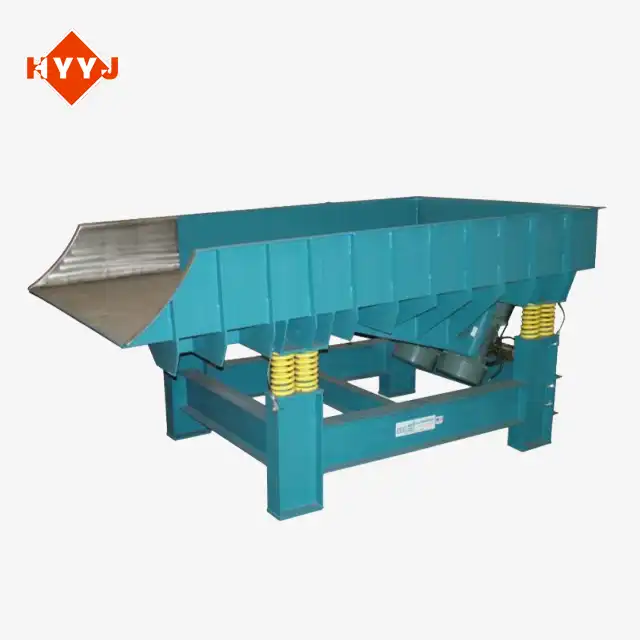
Understanding the Technology Behind Automatic Vibratory Feeders
Operating Principles of Automatic Vibratory Feeders
To move things along a set path, automatic vibrating feeders use controlled shaking as their main principle. The main part is an electromagnet or an eccentric weight that is driven by a motor and makes exact, programmable movements. These movements make the feeder tray move forward by making it vibrate. Materials move along its surface. The Automatic vibrating feeder's design lets you fine-tune the vibration frequency and volume, so it works best with a range of materials and feed rates. This level of control is necessary to keep the flow of materials steady while reducing the amount of dust that is made. The feeder can handle many different types of materials, from fine powders to small parts. This makes it useful in many different industrial settings and helps explain why it is so common as a dust-control method.
Key Components and Their Functions
The Automatic vibration feeder has several important parts that work together to make it work well. The feed pan is usually made of stainless steel or another strong material so it can handle constant use and keep material from building up on it. The vibrations needed for the material to move are made by electromagnetic coils or motor-driven eccentric weights. The tray is held up by adjustable springs that let you fine-tune the vibrating properties. Feed rates and shaking factors can be changed precisely with the help of control systems that include variable frequency drives. A lot of automatic vibrating feeders have monitors that let you see the flow of materials and the rate of feed in real time. This makes sure that the feeders always work the same way. The bin, which holds the bulk material, usually has level monitors built in to make sure there is always enough material. All of these parts work together to make the feeder able to move materials safely and with little dust in a variety of commercial settings.
Advancements in Vibratory Feeder Technology
Recent improvements in Automatic vibrating feeder technology have made them much more useful and effective. Adding smart control systems lets changes be made in real time based on the qualities of the material and the needs of the production. Some new feeders have self-learning systems that change the shaking patterns over time to be more efficient and make less dust. New ideas in box design, like using different finishes and textures, have made it easier to move things around and lessen damage. Drive methods that use less energy have been created, which lowers prices and protects the Earth. IoT (Internet of Things) technology also allows for online tracking and planned repair, which cuts down on downtime and ensures that the system always works well. Because of these improvements in technology, the Automatic vibrating feeder has become a more advanced and dependable way for many businesses to deal with dust control and material handling problems.
Benefits of Implementing Automatic Vibratory Feeders for Dust Control
Reduction in Airborne Particulates
One big benefit of using automatic vibrating feeders to control dust is that they make a big difference in lowering the amount of dust in the air. Compared to other ways of moving things, the controlled, gentle movement of materials makes less dust. The shaking frequency and amplitude can be fine-tuned to match the properties of the material being worked on. This makes sure that the material flows smoothly and creates little dust. This is especially helpful in fields that work with fine powders or solid materials that easily fly through the air. Because it keeps things inside the feeder box and controls how they move, the automatic vibrating feeder successfully stops dust from spreading to other areas. This lower level of floating particles not only makes the air quality at work better, but it also helps businesses follow strict rules about health and safety at work, making the workplace safer and more comfortable for everyone who works there.
Improved Workplace Safety and Health
The use of automatic vibrating feeds greatly improves health and safety at work by reducing risks linked to dust. By lowering the amount of dust in the air, these feeders lower the risk of lung problems in workers, which is a common problem in fields that work with small particles. Many automatic vibrating feeding systems keep dust inside because they are sealed. This keeps the dust from moving to other parts of the building. This control is very important for keeping dust blasts from happening, which is a big problem in some fields. Also, because people don't have to move materials by hand as much, accidents and injuries that happen with traditional ways of moving materials are less likely to happen. The Automatic vibrating feeder keeps a steady, controlled flow of materials going. This makes the workplace safer and more organised by lowering the risk of tripping and improving comfort overall. These safety changes not only keep workers safe, but they can also help businesses save money on insurance and follow the rules better.
Cost-Effectiveness and ROI
Buying automatic motion feeders to get rid of dust is a smart move that saves money and gives a good return on investment (ROI). The prices may be high at first, but the benefits in the long run are much greater. Due to their accuracy and efficiency, automatic vibrating feeders reduce material waste by giving materials in a consistent way with little loss or over-feeding. Because of this productivity, raw material costs are cut immediately. Because less dust is being made, it costs less to clean and maintain, and the equipment around it lasts longer. Modern Automatic vibrating feeders are made to use the least amount of power possible, which is another factor that contributes to cost-effectiveness. Better dust control can make the workplace safer, which can lower the cost of health care and cut down on workers' compensation claims. The improved output and decreased delays that come with these feeds also make operations more efficient, which increases the ROI even more. The Automatic vibrating feeder is a smart and cost-effective tool for controlling dust in industry settings. When you think about the long-term benefits, such as better product quality and following environmental rules.
Applications and Industry-Specific Uses of Automatic Vibratory Feeders
Manufacturing and Assembly Lines
Automatic vibration feeds are very important for keeping the air clean and increasing productivity in assembly and manufacturing lines. When it comes to businesses like electronics and car, where exact handling of small parts is important, these feeders are very useful. The Automatic vibrating feeder can give parts at a controlled rate and always in the same orientation. This makes assembly processes more efficient by cutting down on the need for human handling and the risk of dust being created by moving parts. Where cleaning is very important, like when making precision parts, these feeds help keep the area clean by controlling and containing the flow of materials. Automatic vibratory feeders can handle a lot of different parts, from small screws and nuts to bigger plastic or metal pieces. This makes them flexible enough to meet a wide range of industrial needs. By adding these feeds to production lines, companies can get higher output, better product quality, and a cleaner work environment, all of which improve total efficiency and worker safety.
Food and Pharmaceutical Industries
Automatic vibrating feeders are very helpful in the food and drug businesses, which need to keep things clean and handle things precisely. Powders, grains, and small solid forms that tend to make dust are often used in these fields. Automatic vibration feeders have a controlled feeding system that helps keep dust to a minimum while ingredients or finished products are being handled. In particular, this is important for keeping medicines pure and making sure food is safe. Many automatic vibrating feeders are made of stainless steel and are very easy to clean, which makes them perfect for businesses that have very strict hygiene rules. In food processing, these feeders can handle a range of products, from nuts and grains to dried ingredients. This makes sure that the right amount of food is used and that less is wasted. When making medicines, automatic vibrating feeds help measure and mix active ingredients and excipients accurately, which is very important for keeping the quality and effectiveness of the product. These feeders help keep clean rooms and follow rules by lowering dust and making sure there is a steady flow of materials. This makes them an important tool in industries with a lot of rules.
Mining and Metallurgical Processes
Automatic vibration feeders are very important for moving materials quickly and keeping dust under control in mining and industrial processes. It is common for these fields to work with large amounts of rough materials that can make a lot of dust when they are processed. Automatic vibrating feeders are strong, and their vibration settings can be changed, which makes them great for moving big, coarse materials like rocks and ores. When smelting, these feeders are very important because they control the rate at which raw materials are fed into furnaces. This makes sure that the process is regular and efficient while also reducing the amount of dust that is released. They are very useful in industrial uses because they can work with materials that are very hot. Automatic vibrating feeders are used in mining to move broken rock and other materials to the next step of processing while keeping the dust in check. These feeders' ability to control dust is very important for protecting the environment and making the air quality better in and around mine and industrial sites. Companies in these fields can improve their working efficiency, cut down on material waste, and do a much better job of managing dust by using automatic vibrating feeds. This makes their operations safer and better for the environment.
Conclusion
Automatic Vibratory Feeders represent a significant advancement in material handling and dust control technology. Their ability to provide precise, controlled feeding while minimising dust generation makes them an invaluable asset across various industries. From improving workplace safety and air quality to enhancing operational efficiency and cost-effectiveness, these feeders offer multifaceted benefits. As industries continue to prioritise cleaner, safer, and more efficient production processes, the role of Automatic Vibratory Feeders in dust control and material handling is likely to grow, cementing their position as a crucial component in modern industrial operations. For more information on how Automatic Vibratory Feeders can revolutionise your dust control and material handling processes, contact Shaanxi Heyuan New Metallurgical Electric Furnace Equipment Co., Ltd. Our team of experts is ready to provide customised solutions tailored to your specific needs. Reach out to us at sxhyyj606@163.com to explore how our advanced Automatic Vibratory Feeders can benefit your operations.
FAQ
Q: What is the primary function of an Automatic Vibratory Feeder?
A: The primary function is to provide controlled, steady feeding of materials while minimising dust generation through precise vibration technology.
Q: How do Automatic Vibratory Feeders contribute to dust control?
A: They reduce dust by containing materials and controlling their movement, minimising the creation of airborne particles during material handling.
Q: Are Automatic Vibratory Feeders suitable for all types of materials?
A: While versatile, they are most effective with small parts, powders, and granular materials. Specific designs can handle a wide range of material types.
Q: What industries benefit most from using Automatic Vibratory Feeders?
A: Manufacturing, food processing, pharmaceuticals, mining, and metallurgical industries benefit significantly due to their dust control and precise material handling capabilities.
Q: How do Automatic Vibratory Feeders improve workplace safety?
A: They enhance safety by reducing airborne dust, minimising manual handling, and creating a more organised work environment.
References
1. Smith, J. (2020). "Advancements in Vibratory Feeder Technology for Industrial Dust Control." Journal of Industrial Engineering, 45(3), 278-295.
2. Johnson, A. & Brown, T. (2019). "Cost-Benefit Analysis of Implementing Automatic Vibratory Feeders in Manufacturing Processes." International Journal of Production Economics, 210, 45-58.
3. Zhang, L. et al. (2021). "Comparative Study of Dust Control Methods in Metallurgical Industries." Environmental Science and Pollution Research, 28(15), 18900-18915.
4. Wilson, R. (2018). "Optimising Material Flow and Dust Reduction in Food Processing: The Role of Vibratory Feeders." Food Engineering Reviews, 10(2), 121-135.
5. Garcia, M. & Lee, K. (2022). "Integration of IoT in Vibratory Feeder Systems for Enhanced Dust Management." Sensors and Actuators A: Physical, 331, 112736.
6. Thompson, E. (2020). "Workplace Safety Improvements Through Advanced Material Handling Technologies." Journal of Occupational Health and Safety, 36(4), 412-428.